 Image 1 of 5
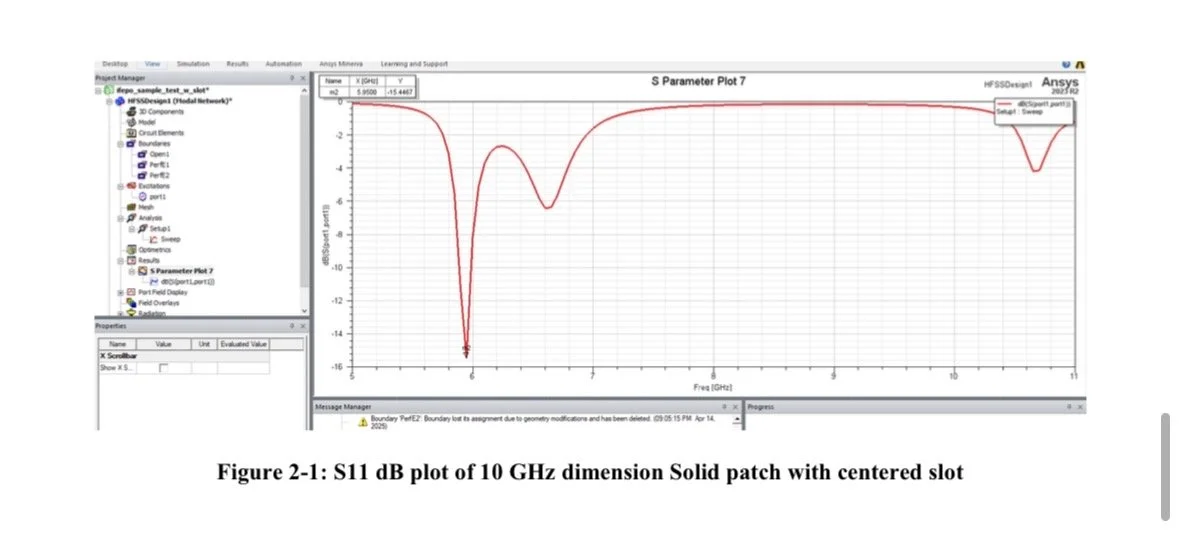 Image 2 of 5
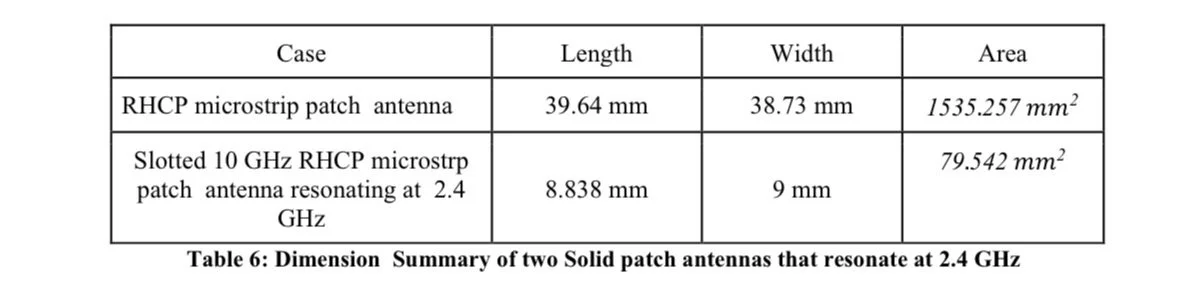 Image 3 of 5
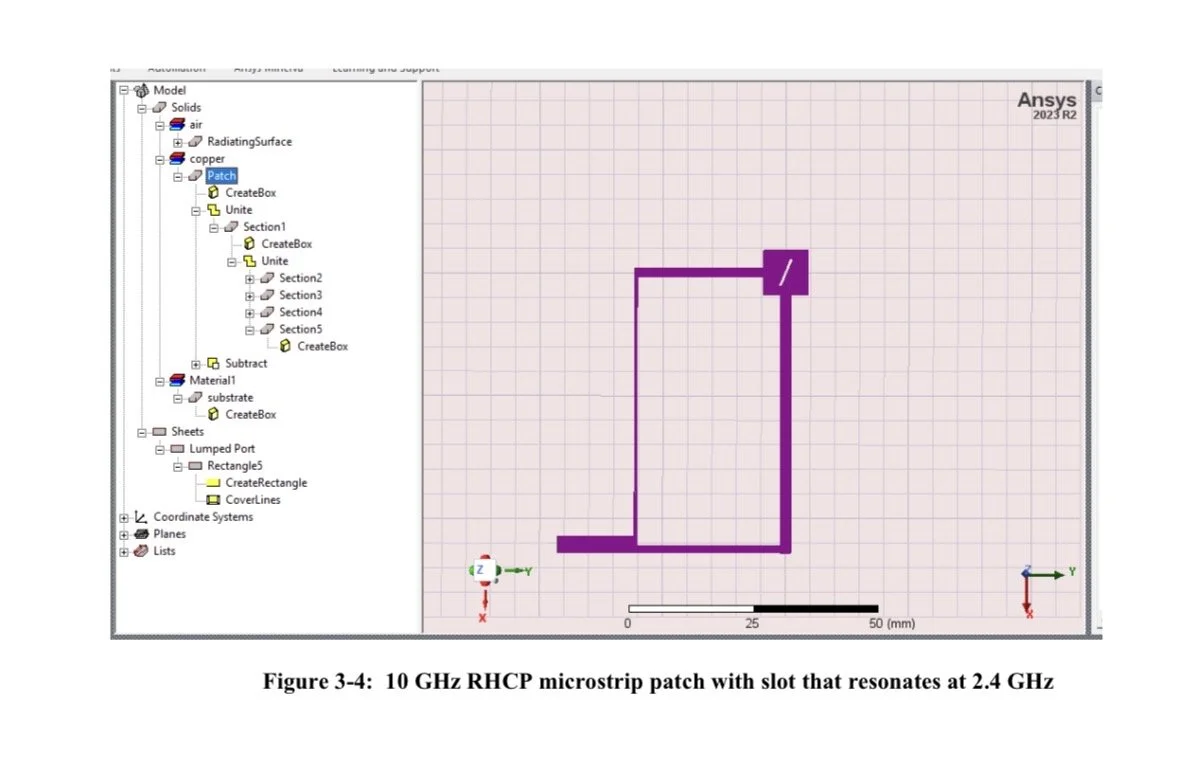 Image 4 of 5
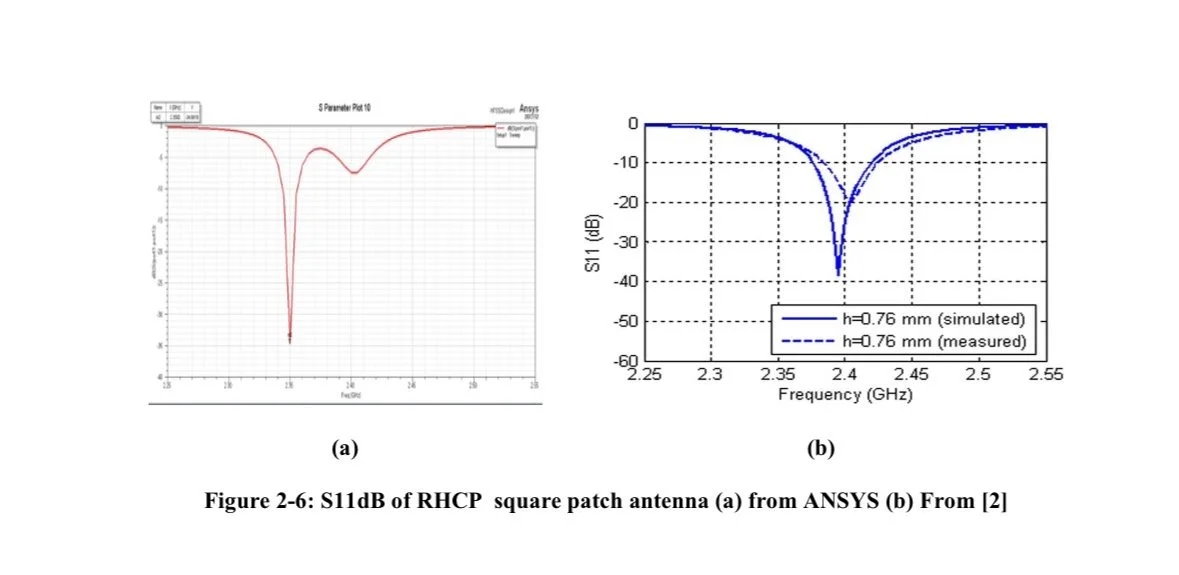 Image 5 of 5
Problem: Standard patch antennas designed for 2.4 GHz are physically large. My goal was to achieve the same resonant frequency in a much smaller footprint.
Approach: Instead of designing a 2.4 GHz antenna from scratch, I took a 10 GHz patch — which is physically small by nature — and added a centered rectangular slot. The GA (Genetic Algorithm) then optimized the slot’s length, width, and angular orientation to shift the resonant frequency down to approximately 2.4 GHz without changing the patch dimensions.
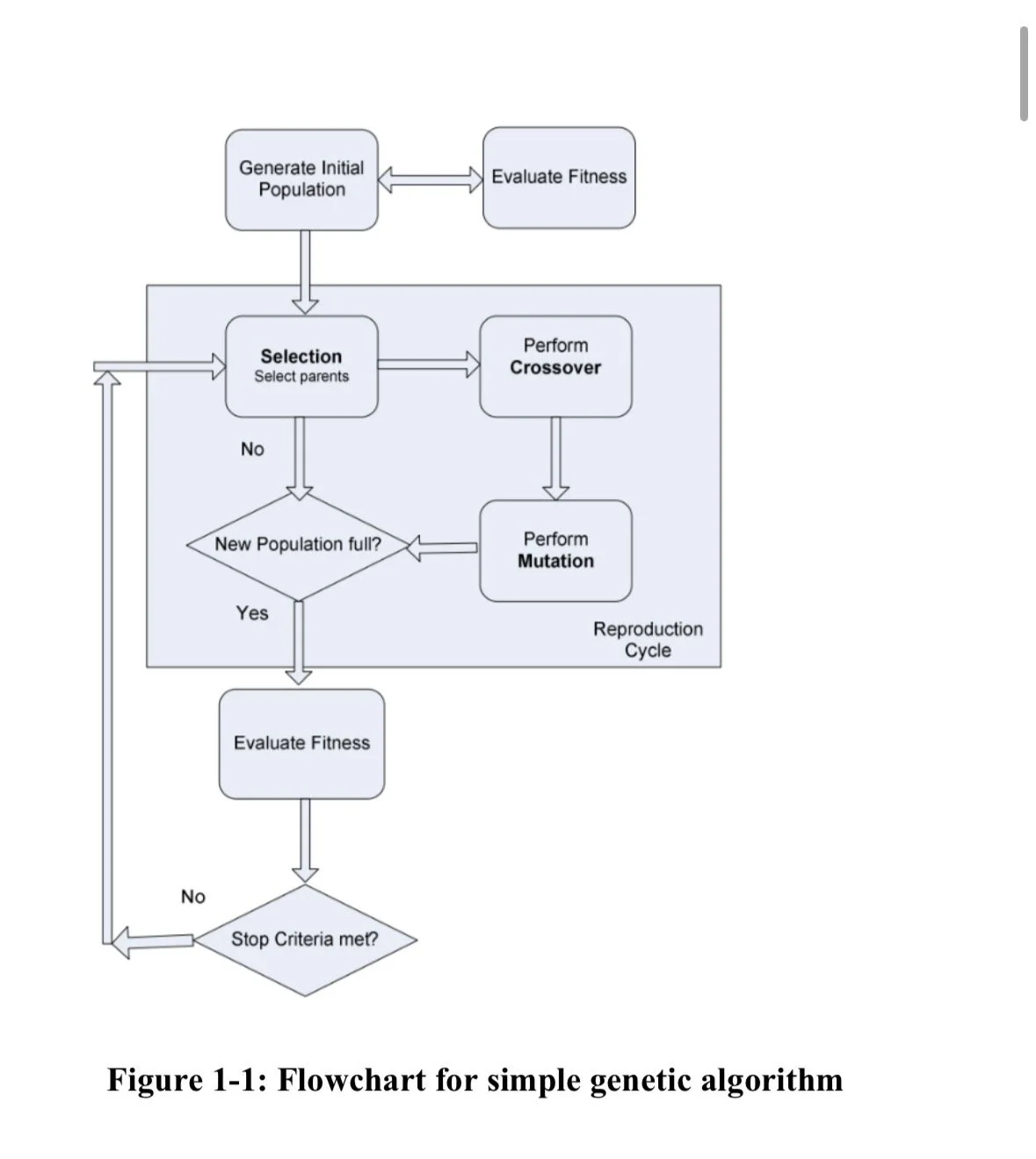
What the GA (Genetic Algorithm) did: Using ANSYS HFSS Optimetrics, the GA ran up to 1000 generations with a population of 30, optimizing toward an S11 return loss target of -30 dB at 2.4 GHz.
Results: I achieved over 94% antenna area reduction for both a standard linearly polarized patch and a dual-fed Right Hand Circularly Polarized antenna, while maintaining acceptable return loss around -15 dB.
Honest limitations observed: GA is computationally intensive, stochastic so not guaranteed optimal, and the size reduction introduces fabrication complexity. Gain, bandwidth, and radiation efficiency weren’t fully evaluated.
All images shown are screenshots from my submitted graduate paper that was required for my degree
Problem: Standard patch antennas designed for 2.4 GHz are physically large. My goal was to achieve the same resonant frequency in a much smaller footprint.
Approach: Instead of designing a 2.4 GHz antenna from scratch, I took a 10 GHz patch — which is physically small by nature — and added a centered rectangular slot. The GA (Genetic Algorithm) then optimized the slot’s length, width, and angular orientation to shift the resonant frequency down to approximately 2.4 GHz without changing the patch dimensions.
What the GA (Genetic Algorithm) did: Using ANSYS HFSS Optimetrics, the GA ran up to 1000 generations with a population of 30, optimizing toward an S11 return loss target of -30 dB at 2.4 GHz.
Results: I achieved over 94% antenna area reduction for both a standard linearly polarized patch and a dual-fed Right Hand Circularly Polarized antenna, while maintaining acceptable return loss around -15 dB.
Honest limitations observed: GA is computationally intensive, stochastic so not guaranteed optimal, and the size reduction introduces fabrication complexity. Gain, bandwidth, and radiation efficiency weren’t fully evaluated.
All images shown are screenshots from my submitted graduate paper that was required for my degree